Saturday, September 28, 2013

Ted Cruz VS Wendy Davis

This past week saw the continued rise of Ted Cruz, Republican freshman Senator from Texas and his tireless crusade against "Obamacare" and its adherents. His 21-hour rant was widely mocked and criticized, being full of non-sequiturs and outright nonsense. Reading from "Green Eggs and Ham," as well as detailing personal shopping habits, etc. were not widely received as an endearing challenge to the establishment or the status quo.

A few months back, as many of you most likely remember, Texas state Senator engaged in an 11-hour filibuster that was widely covered and, in many cases, celebrated as a true-to-form challenge to the Texas establishment concerning abortion rights and an impending vote concerning the future availability of abortion.


This contrast of media coverage about these two crusaders has left some media critics enraged, perceiving the media as mocking Cruz while championing Davis. However, the differences between these two instances are relatively stark, and the comparison amounts to a false equivalency. I appreciate media critics and their enduring challenge to media hegemony, but on this point they're plainly incorrect. Indeed, the "liberal media bias" trope is pretty tired and, for the most part, unfounded as a guiding principle of media behavior. In general, media bias exists on both sides to a tremendous degree. This particular story represents the knee-jerk reactions of one side of the ideological divide to accuse "the media" (I've grown to love people erroneously making a monolith out of this institution) of framing stories in unfavorable ways to their agenda. Popular media outlets have grown extremely sensitive to these sorts of accusations and often give full and dedicated air-time to both sides of a debate regardless of the actual merits or facts of an argument's premise. In the case of Ted Cruz, it seems fairly apparent that most of the criticism is coming from conservative commentators and politicians, not journalists.


First of all, the Ted Cruz rant on the US Senator floor was not a filibuster. It was not a parliamentary mechanism. It wasn't to prevent a vote on a social cause he believes in. It was self-aggrandizing stunt to bolster his own 2016 prospects and develop his own "Tea Party cred." His strategy at this point is hinged on fracturing his party, getting as many Republican politicians angry at him as possible (See: Corker & King & Burr), and his speech was plainly in the accepted window of debate in the Senate over this particular bill. He wasn't speaking truth-to-power in the same setting, conditions, or environment as Wendy Davis, who was stalling a bill until the midnight hour (when the Senate went on recess) and was viewed as a champion of women's rights and Democratic strong-arming. Ted Cruz simply gave a really, really long speech-- most of which was totally off-topic and a waste of everybody's time. Indeed, a great number of his colleagues have criticized him and his defunding endeavors with extremely volatile language. So, generally, nobody in the establishment-- either side of the aisle-- have a particularly strong love for Cruz. Therefore, the comparisons between Davis and Cruz are wholly unfounded and insubstantial.

http://theweek.com/article/index/250186/did-ted-cruzs-talkathon-expose-liberal-media-bias

Monday, September 23, 2013

Role of Journalists as Fact-Checkers (PART II)

This past month, I've written about the role of journalists as fact-checkers and the often contentious debate it can spawn. Since then, I've been on the look-out for instances where journalists challenge political activist/operatives or politicians, more often than not in contentious ways. Even if the journalist isn't intending to be contentious, the resulting conversation is often rife with bickering, interruptions, and a general feeling of, "What did I just watch?" It's the kind of television that puts you on the edge of your seat, and ripens your faith in journalism as an investigative and vital profession and institution.


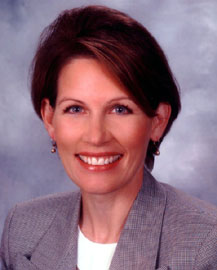
This week, I want to bring to your attention a cringe-worthy exchange between Wolf Blitzer and Michele Bachmann. The issue at hand is, naturally, the Affordable Care Act and its impending implementation when open enrollment commences at the beginning of October. Among the assertions that Bachmann posits is that 30 million Americans are going to lose their insurance as a result of "Obamacare." Wolf Blitzer surprised me here, as he challenges her statement, saying, "I'm not sure where you're getting those numbers. That's not true. You'll have to show me your numbers." The conversation develops into an almost openly hostile one, with Blitzer eventually recognizing that he's dealing some difficult questions to Bachmann.

Of course, when people are comparing President Obama to Hitler and the ACA to Nazism, I'd like journalists to ask them some tough questions. But that's just me. Watch the full clip in all its brutal and cringe-inducing glory here:

http://www.huffingtonpost.com/2013/09/27/wolf-blitzer-michele-bachmann-obamacare_n_4004727.html

Monday, September 16, 2013

Syria as Scandal

Something that isn't often talked about when discussing media biases is the presence of bias regarding foreign policy. Foreign policy isn't as much of a hot-button, contentious debate in the US as is the horse-race of party politics and meager gains in public opinion against the current administration. By and large, the bureaucratic inertia of American foreign policy prevents American citizens from scandalizing foreign policy initiatives and the status quo of American hegemonic force. American citizens can rarely concern themselves with the global community, as well, often being touted as among the least-informed Western industrialized populaces in the world. The whole, "war is America's way of teaching geography," expression, while hyperbolic, isn't too far off and is rooted in some degree of reality.


So, it's interesting when the American media picks up a narrative and sticks to it fervently in the realm of foreign policy. The fact that President Obama decided to consult with Congress (a president that respects the War Powers Resolution-- you'd think he'd be the Tea Party's best friend, but alas...) rather than unilaterally inflict punishment on the Syrian regime should be a breath of fresh air to a war-weary America. A president who, even just this once, decided to act multilaterally and slide into his Constitutional role as Commander-in-Chief (but not unless commissioned by the US Congress) is refreshing no matter what side of the political continuum you fall on.

However, it's become a huge talking-point in American media to paint this as a loss of presidential power and sovereignty-- a weakening of a once-proud office. I don't think I'm alone in my disturbed reaction to the universal reaction that, "If Congress doesn't approve of Obama's Syria plan, it'll be a massive humiliation!" This is a wonderful example of, as we've discussed in this class, external pressures on the media's narrative. They have a financial interest in sensationalizing this Syria story-- and developing a deep-rooted, contentious party-line battle between President Obama and Congress is music to their ears. The story is never, "Well, we're certainly glad that this President actually respects his Constitutional role as it relates to the Congress and however this works out will be a win for democratic and constitutional idealism!" Of course not.

The blood lust for political injury is never sated in the media.

http://www.theatlantic.com/politics/archive/2013/09/the-press-and-the-syria-debate-neither-neutral-nor-balanced/279256/

Tuesday, September 10, 2013

Role of Journalists as Fact-Checkers

Now that we're almost a year on from a contentious and bitter presidential election cycle, many Americans have wiped the traumatic experience from their psyche. Many of the issues can still be recalled clearly, the feeling of anticipation, and specific events that served as pivotal to a particular candidate. However, the constant pull back and forth between media outlets, accusations of bias and tailoring media outlets' messages to a certain type of audience can be quickly glossed over in the recollection of election season. MSNBC was often accused of being in the pocket of the Obama campaign, while Fox News was similarly accused of favoring the Romney candidacy. Between those two polar opposites, individual outlets (such as CBS, CNN, ABC, etc.) would be routinely put through the ringer of a particular treatment of a brief campaign moment, a misplaced word, or a "harsh interview" of a campaign surrogate. We've all been a party to this, I believe: mocking Mitt Romney's interview with David Gregory before the 1st debate, criticizing Fox News' treatment of the "47% video," being baffled that a media outlet would advertise a particular campaign's message or commercial. It's somewhat inevitable, and something that individuals get caught up in. The horse race is seductive.


However, an important facet of this (and indeed, what became a huge factor during the Republican primary debates and the three general election debates) is the role of journalists in "fact-checking" the candidates. Entire websites and organizations are dedicated to this idea-- rating the truthfulness of a particular statement or ranking the biggest, most consistent liars on the Hill. In a realm where journalists are somewhat unreasonable expected to harbor zero biases, how do we also expect them to be fact-checkers, especially when "facts" are so often subjective reality spun as objective and empirical knowledge?

Despite the burden, we do hold journalists accountable for these things. Some of the biggest moments of the general election season was when Candy Crowley clarified and corrected Mitt Romney's assertion that Obama did not label the Benghazi attacks as an act of terror. Her "journalistic activism" was widely celebrated or panned depending upon your chosen outlet, but it was still an important factor of the role of the journalist. Conservatives would be equally enraged and upset if their candidate was accused of something patently untrue and the interviewing journalist simply let the accuser voice their unfounded opinions without challenging them. Even something along the lines of, "Can I see some numbers to back up that claim?"


NBC News' Chuck Todd (Senior Political Director) has caught some flack in the past few weeks (from DailyKos):
MSNBC host Chuck Todd said Wednesday that when it comes to misinformation about the new federal health care law, don't expect members of the media to correct the record. 
During a segment on "Morning Joe," former Pennsylvania Gov. Ed Rendell (D) speculated that most opponents of the Affordable Care Act have been fed erroneous information about the law. Todd said that Republicans "have successfully messaged against it" but he disagrees with those who argue that the media should educate the public on the law. According to Todd, that's President Barack Obama's job. 
"But more importantly, it would be stuff that Republicans have successfully messaged against it," Todd told Rendell. "They don't repeat the other stuff because they haven't even heard the Democratic message. What I always love is people say, 'Well, it's you folks' fault in the media.' No, it's the President of the United States' fault for not selling it."
This naturally upset a great number of liberals and Democrats, but it brings to the fore an extremely important question: is it actually the role of a journalist to correct, clarify, or outright "call B.S." on a political operative who is spouting misinformation for political gain? In this particular instance, many conservatives would more than likely defend Todd's assertion. However, if the shoe was on the other foot, I am certain they'd have a different opinion about it.

http://www.dailykos.com/story/2013/09/18/1239734/-Chuck-Todd-Pointing-out-Republican-lies-isn-t-his-job

http://www.dailykos.com/story/2013/09/22/1240110/-Chuck-Todd-Is-The-Embodiment-Of-A-Delegitimized-Traditional-Media#

Sunday, September 1, 2013

POLS3380 Post #1

In the realm of political journalism, there is often a stark distinction to be made between "analysis" and pure "journalism." You hear this sort of sentiment routinely from partisan pundits on both sides of the ideological spectrum.

That being said, there is a certain expectation from journalistic sites that claim to harbor no intentional bias. Take FoxNewsLatino, for instance. While the Fox News Network is often cited as extremely partisan (with entire non-profit organizations dedicated to keeping them in-check), their website is recognized as being less-so, similar to MSNBC/NBC News and their news website NBCNews.com, which has no editorial or executive connection to the actual news network. However, I was struck by a recent article entitled, "Obama Backs Lawsuit Defending Texas Voter ID Law." Reading this article's title, even if you're just skimming through the potential articles to read will give you an impression that is not only misleading, but directly contrary to the substance of the article. The piece in question is relatively straight-forward, concerning President Obama and the Justice Department backing a lawsuit which challenges the Texas voter ID law. The substance and title are at certain odds with each other, which should raise some red flags for critical readers.

There is a tendency in journalism to editorialize in ways that don't appear as overt as partisan analysis. The specific stories a news outlet chooses to publish or focus on is an indirect means of editorializing, especially if the aim is to give a partisan impression to the reader. For instance, if you go to a news website's political homepage and see nothing but articles about unintended consequences of "Obamacare," or how some figures perceive President Obama as appearing "weak on Syria," then the distinct impression you'll gather is that the Obama presidency is in dire circumstances and that the walls are crumbling around him.

In another article from FoxNews.com entitled, "States marketing 'ObamaCare' with other names to bolster enrollment," the author brushes over facts and only penetrates the surface-level of assertions that have become shallow political talking-points. For instance, the article ends and is built upon the statement,  "National polls show the public is wary about ObamaCare, including a Kaiser Family Foundation poll released last week that showed 42 percent of Americans disapprove of the law, compared to 37 percent favoring it." However, some important facts that Fox News simply does not add is that the same Kaiser Family Foundation poll found that 57% of Americans oppose defunding "Obamacare." In addition, of those who oppose "Obamacare," a quarter of them oppose it because it "didn't go far enough," more than likely a nod to a single-payer system or public option. Reanalyzing these statistics with these vital aspects in mind, it paints a truly different picture than the one provided by Fox News and other conservative outlets.