Saturday, November 30, 2013

"Mission Accomplished"

The dreaded deadline for the Affordable Care Act's healthcare.gov fixes has finally arrived. As of midnight tonight, according to the popular media, every single problem with healthcare.gov should be fixed or the Obama administration will amount to an utter failure.

This sort of dooms-day-scenarios are a favorite of the national media outlets. As I've spoken before about interpreting election results, this sort of deadline tea-leaves is more or less exactly the same. More than anything, prominent "unbiased" pundits will ensure that these narratives persist, and that the administration is wholly unable to move beyond the type of slip-ups and mistakes that plague everyday existence.

Media outlets took the idea that the President wanted a lot of these glitches to be fixed by the end of November to mean that, "The site needs to be flawless by midnight on the last day of November." It's quite incredible to consider the overarching obsession with conflict and chaos that the media has.

More than anything, this gives popular media outlets an absolutely terrible name. Any time I've turned any news outlet on in the past two weeks, this is literally the only story they've been reporting on. Anecdote after anecdote, while throwing in a poll or two about how Republican party has shrugged off the defeat of the government shutdown in October. The idea that the media frames the national political discourse is an extremely generous way of describing its destructive, short-sighted effect on American politics.


http://news.yahoo.com/stakes-high-obamacare-website-hits-deadline-111611255.html;_ylt=A2KJ2PZKsppSzm0AVivQtDMD

Thursday, November 21, 2013

The Nuclear Option

When I heard that a "nuclear option" was being considered in the US Senate, I began to panic for a brief moment before realizing that it was just another case of over-hyped media obsession with drama. As I read on, the decidedly undramatic nature of the story began to reveal itself. The media's portrayal of this "conflict" has not reflected the necessity, nor the facts, surrounding the issue.


Of the 168 filibusters over an executive appointment since the beginning of the Constitutional United States well over 200 years ago, over half of them have occurred during the Obama Presidency. That is a difficult figure to wrap your head around, especially since the President is only a year into his second term. However, the obvious abuse of this previously noble institutional tool is apparent to anyone willing to look at the facts and circumstances of this debate.

There's a funny Jon Stewart clip that summarizes the media phenomenon regarding this story quite well:

Daily Show with Jon Stewart

Overall, despite the historic nature of this "rules change," it was a necessary and important alteration in order to make this otherwise failing institution function properly.


http://news.yahoo.com/why-harry-reid-finally-went-nuclear-senates-filibuster-125200983.html;_ylt=A2KJ2UglsppSgm0AXBvQtDMD

Thursday, November 14, 2013

The ACA Post #346,221,376

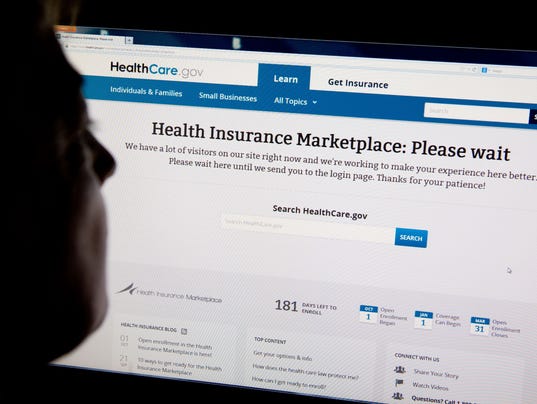
This is something that I've wound up talking a lot about in this blog: false equivalencies for the sake of fostering dichotomous political battles. Popular American media outlets are particularly guilty of this information crime, and nowhere is it more present than in the coverage of the implementation of the Affordable Care Act and its website, healthcare.gov.

The story of the failed launch has been fodder enough for popular media sources, but their attention has shifted a bit since then. There's been a growing narrative about the dreaded deadline the Obama administration has built for itself regarding the ultimate fix of the healthcare website, which I will inevitably talk about in a later post. However, I'm also speaking of the growing concern regarding the millions of healthcare plans that are being dropped by private insurance companies in order to comply with the ACA.


The media obviously jumped all over this story, building it up as the president lying, a failure of the ACA, etc. I think we've all seen enough clips of President Obama saying, "If you like your plan, you can keep it," ad infinitum. However, an important feature of this story that the media is entirely ignoring in favor of the conflict and drama of the alternative forgery of reality is that the ACA is not dropping these plans. The Obama administration is not dropping your plan. Private insurance companies saw their best course of action to meet the requirements of insurance plan quality was to drop the ones that were junk. Those are the plans being dropped. Democrats and liberal surrogates have been endlessly spouting off this talking point to little effect: the media continues it unfettered narrative. Is the federal government now supposed to say, "Private companies no longer even have control over which plans they will choose to carry or ultimately dump"? That hardly seems like the message the conservative media is advocating.

It is a fine line we're treading here, and Obama tried to tread it by clarifying his previous campaign statements. He was highly criticized even by Democrats for this, but it really is a subtle, grey-area we're working within here as a country. This legislation represents a complicated interaction between a highly unregulated private market and the federal/state government(s) attempting to reign in bad business practices and insufficient coverage. While the world isn't black/white at the end of the day, that doesn't stop the media from demanding it to be.

This again begs a further analysis: false equivalencies. We've seen the media build up a "Pro" and "Con" table concerning the ACA, and the potentially newly-insured millions, especially those with diseases that were previously unable to be covered in the first place, are being honestly and equally compared to the inconvenience of having your insurance plan dropped. The media also conveniently ignores the fact that insurance companies dropped people on a constant basis before the ACA for pre-existing conditions and insufficient coverage. Where was the incessant media outrage then? Instead, the media is establishing these false equivalencies as though they can honestly compare to each other. Just another example of ridiculously out-of-touch, beyond-the-pale priorities.

http://www.latimes.com/nation/politics/politicsnow/la-pn-white-house-dropped-healthcare-plans-20131113,0,4118943.story?track=rss#axzz2mBowNP9A
Thursday, November 7, 2013

Rubio, Paul, and Christie

In this brief video clip and accompanying article, Marco Rubio reflects on the meaning of the historic Christie victory in the New Jersey governor race. In a reaction very similar to that of Senator Rand Paul, Rubio makes it a point to say that you can't extrapolate national electoral meanings from such a local election.

Understandably, this sort of dismissal of Christie's win is being interpreted as a shallow display of a violated ego. However, I interpret the statement of both Rubio and Paul as a sort of indictment of the media's obsession with over-analyzing and over-interpreting electoral results. This sort of over-interpretation can be easily seen in the 2012, 2010, and 2008 election cycles. At the end of all 3 (and presumably far before these three, as well), the media predicted the utter collapse and imminent electoral failure of the overarching losers of the races. For instance, in 2010 after the Republicans took control of the House and Obama's "shellacking" comment, prominent media outlets were quick to herald an upcoming trend of Republican dominance. Similarly, after 2008, every story for a year afterward was about how the Republican party was essentially destroyed by the defeat and would likely be shuffled to the sidelines for what appeared to be a generation.

So, in typical fashion, the media outlets who report exclusively on the horse race of politics were quick to not only interpret the Christie victory as something more meaningful than it actually is, but were also just as likely to dismiss criticisms of media reaction to the Christie victory.


http://politicalticker.blogs.cnn.com/2013/11/06/rubio-dont-jump-to-conclusions-about-meaning-of-christie-win/

Thursday, October 31, 2013

Medicare & The Affordable Care Act

As a month since healthcare.gov's launch comes and passes, consumers are left with many impressions. The President and his surrogates apologizing profusely, Republican opportunists leaping on the website, and the 24-hour news cycle naturally beating the subject into the ground, litigating the subject into ridiculousness.

An important feature of this story, however, is that while the numbers are picked from internal memos, very little editorial attention is paid to similar events in the past. One event in particular that is in recent memory is the launch of Medicare Part D under the Bush administration. Occasionally, you'll hear liberal commentators bringing this example up, along with the failed launch of Medicare in the mid-60's, but overall, the narrative ignores this historical precedent. This precedent is important because it gives credence to the idea that this is not a failure specific to the Obama administration, and that failures of this magnitude can be overcome with great success. When is the initial failure of Medicare mentioned when we discuss the program as a pillar of the American social contract? How about Medicare Part D, the program that effectively allows seniors to not have to pay an exorbitant proportion of their fixed income on their prescription drugs? These programs become extremely important aspects of the American character, but only if they're a sliver of a chance to survive the cynical resistance to mild reforms toward egalitarianism. I realize this is an editorial attitude to take regarding this article in particular, but as with every aspect of the coverage of the ACA, perspective is incredibly important.

Janet Perez oversees specialists help callers with health insurance, at a customer care center in Providence, Rhode Island

http://news.yahoo.com/enrollment-obamacare-very-small-first-days-documents-011616468.html;_ylt=A2KJ2UhmjZpSFXIAW0TQtDMD

Friday, October 25, 2013

Leadership of Ted Cruz

The idea of a national media obsessed with conflict and dramatic narratives is not new. However, with help from this class, I personally have grown to blame just about every problem with our national political discourse on how the media frames our political climate.

Not only is Ted Cruz, a junior 9-month old senator the current star of the GOP, but the media is also padding his prospects for a 2016 presidential campaign. By placing such a tremendous amount of importance on conflict and dramatic actors on the political stage, the media is complicit in this entire shutdown debacle.

On a somewhat unrelated note, there is also a spectacular amount of bias in how the nationality of the senator is presented. During the first few years of President Obama's tenure, the media fell in love with the "Birther" narrative, despite being largely critical of it. Despite attempts to dismiss demands for President Obama's birth certificate and lawsuit after lawsuit challenging the legitimacy of his election,  the media's encouraging deluge of coverage ultimately validated the movement. However, such a conversation has been almost entirely absent regarding Ted Cruz's Canadian birth, which is wholly ignored by the former "Birthers" who tried to throw President Obama out of office on account of his formerly alleged foreign birth (polls as recent as late-2012 posit that 55% of Republicans still think Obama was born outside of the US), despite also having an American mother like Cruz. Not only does this double-standard exist on the right, but the media's coverage of this issue is also out of balance.

To be clear: I believe that Cruz is entitled to run for President, despite the claims previously made by prominent Republican activists and leaders to the contrary regarding the definition of a "Natural-Born Citizen."


http://news.yahoo.com/blogs/power-players-abc-news/ted-cruz-faults-his-party-for-agreeing-to-lousy-deal-to-reopen-the-government-211727075.html;_ylt=A2KJ2UYaZZpSFVkAAAjQtDMD

Friday, October 18, 2013

Senator Booker

In a campaign that was fraught with negativity and frightening xenophobia, mayor of Newark Cory Booker defeated Lonegan on Tuesday night. Despite coming into this fall with a huge lead in the polls, a highly destructive campaign season broke the candidate down a bit, and the narrative surrounding the campaign for the entirety of this month has been, "Cory Booker is almost certainly going to win-- but does the fact that he's going to win by less than we thought mean something..?!" This narrative, that the Booker brand is somehow compromised because of the margin of victory, is bizarre and lends itself to hyper-negative methods of campaigning.

Similarly, pundits are fighting over the upcoming re-election campaign of Chris Christie in much the same manner. That campaign is about two and a half weeks away, and Christie is the obvious favorite to win the governorship of New Jersey. However, since there is such a tremendous amount of buzz surrounding his potential 2016 presidential candidacy, the big question is by how much he will win. Many pundits are saying that if he scoops up over 60% of the vote, then he will effectively secure his front-runner status in the Republican primary. I could go into a whole diatribe about how naive this analysis is, and how the current Republican party primary would chew up and spit out a centrist candidate like Chris Christie, but that should not only be left to another day, but another blog.


There's another element of this story that is not being played up, regarding Chris Christie's decision to have a special election to elect a new New Jersey senator after the passing of the late Senator Lautenberg. Several years ago, Governor Christie was asked if he would have a special election, or allow the election to fall on the same election day as all other election (first Tuesday following the first Monday of November), should Lautenberg pass while in office. Christ Christie balked at the question, saying that he would never want to waste taxpayers' time and money with a needless special election, and would instead opt to hold it on the same day as all other elections. However, with Christ Christie's re-election vote being held this year, and the presumed massive turnout of Democratic voters to elect a political superstar such as Booker, the Christie campaign opted instead to have a special election to reduce the turnout of Democrats. I've heard this fact brought up one single time on NPR, and have never heard it addressed again since.

http://news.yahoo.com/jersey-democrat-cory-booker-wins-special-election-u-015220410.html;_ylt=A2KLOzLk.39SThoAH3PQtDMD