Saturday, November 30, 2013

"Mission Accomplished"

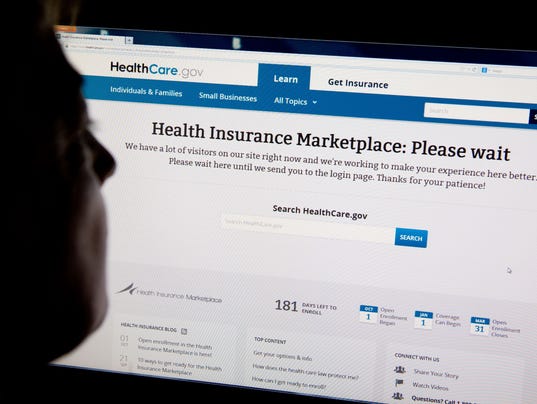
The dreaded deadline for the Affordable Care Act's healthcare.gov fixes has finally arrived. As of midnight tonight, according to the popular media, every single problem with healthcare.gov should be fixed or the Obama administration will amount to an utter failure.

This sort of dooms-day-scenarios are a favorite of the national media outlets. As I've spoken before about interpreting election results, this sort of deadline tea-leaves is more or less exactly the same. More than anything, prominent "unbiased" pundits will ensure that these narratives persist, and that the administration is wholly unable to move beyond the type of slip-ups and mistakes that plague everyday existence.

Media outlets took the idea that the President wanted a lot of these glitches to be fixed by the end of November to mean that, "The site needs to be flawless by midnight on the last day of November." It's quite incredible to consider the overarching obsession with conflict and chaos that the media has.

More than anything, this gives popular media outlets an absolutely terrible name. Any time I've turned any news outlet on in the past two weeks, this is literally the only story they've been reporting on. Anecdote after anecdote, while throwing in a poll or two about how Republican party has shrugged off the defeat of the government shutdown in October. The idea that the media frames the national political discourse is an extremely generous way of describing its destructive, short-sighted effect on American politics.


http://news.yahoo.com/stakes-high-obamacare-website-hits-deadline-111611255.html;_ylt=A2KJ2PZKsppSzm0AVivQtDMD

Thursday, November 21, 2013

The Nuclear Option

When I heard that a "nuclear option" was being considered in the US Senate, I began to panic for a brief moment before realizing that it was just another case of over-hyped media obsession with drama. As I read on, the decidedly undramatic nature of the story began to reveal itself. The media's portrayal of this "conflict" has not reflected the necessity, nor the facts, surrounding the issue.


Of the 168 filibusters over an executive appointment since the beginning of the Constitutional United States well over 200 years ago, over half of them have occurred during the Obama Presidency. That is a difficult figure to wrap your head around, especially since the President is only a year into his second term. However, the obvious abuse of this previously noble institutional tool is apparent to anyone willing to look at the facts and circumstances of this debate.

There's a funny Jon Stewart clip that summarizes the media phenomenon regarding this story quite well:

Daily Show with Jon Stewart

Overall, despite the historic nature of this "rules change," it was a necessary and important alteration in order to make this otherwise failing institution function properly.


http://news.yahoo.com/why-harry-reid-finally-went-nuclear-senates-filibuster-125200983.html;_ylt=A2KJ2UglsppSgm0AXBvQtDMD

Thursday, November 14, 2013

The ACA Post #346,221,376

This is something that I've wound up talking a lot about in this blog: false equivalencies for the sake of fostering dichotomous political battles. Popular American media outlets are particularly guilty of this information crime, and nowhere is it more present than in the coverage of the implementation of the Affordable Care Act and its website, healthcare.gov.

The story of the failed launch has been fodder enough for popular media sources, but their attention has shifted a bit since then. There's been a growing narrative about the dreaded deadline the Obama administration has built for itself regarding the ultimate fix of the healthcare website, which I will inevitably talk about in a later post. However, I'm also speaking of the growing concern regarding the millions of healthcare plans that are being dropped by private insurance companies in order to comply with the ACA.


The media obviously jumped all over this story, building it up as the president lying, a failure of the ACA, etc. I think we've all seen enough clips of President Obama saying, "If you like your plan, you can keep it," ad infinitum. However, an important feature of this story that the media is entirely ignoring in favor of the conflict and drama of the alternative forgery of reality is that the ACA is not dropping these plans. The Obama administration is not dropping your plan. Private insurance companies saw their best course of action to meet the requirements of insurance plan quality was to drop the ones that were junk. Those are the plans being dropped. Democrats and liberal surrogates have been endlessly spouting off this talking point to little effect: the media continues it unfettered narrative. Is the federal government now supposed to say, "Private companies no longer even have control over which plans they will choose to carry or ultimately dump"? That hardly seems like the message the conservative media is advocating.

It is a fine line we're treading here, and Obama tried to tread it by clarifying his previous campaign statements. He was highly criticized even by Democrats for this, but it really is a subtle, grey-area we're working within here as a country. This legislation represents a complicated interaction between a highly unregulated private market and the federal/state government(s) attempting to reign in bad business practices and insufficient coverage. While the world isn't black/white at the end of the day, that doesn't stop the media from demanding it to be.

This again begs a further analysis: false equivalencies. We've seen the media build up a "Pro" and "Con" table concerning the ACA, and the potentially newly-insured millions, especially those with diseases that were previously unable to be covered in the first place, are being honestly and equally compared to the inconvenience of having your insurance plan dropped. The media also conveniently ignores the fact that insurance companies dropped people on a constant basis before the ACA for pre-existing conditions and insufficient coverage. Where was the incessant media outrage then? Instead, the media is establishing these false equivalencies as though they can honestly compare to each other. Just another example of ridiculously out-of-touch, beyond-the-pale priorities.

http://www.latimes.com/nation/politics/politicsnow/la-pn-white-house-dropped-healthcare-plans-20131113,0,4118943.story?track=rss#axzz2mBowNP9A

Thursday, November 7, 2013

Rubio, Paul, and Christie

In this brief video clip and accompanying article, Marco Rubio reflects on the meaning of the historic Christie victory in the New Jersey governor race. In a reaction very similar to that of Senator Rand Paul, Rubio makes it a point to say that you can't extrapolate national electoral meanings from such a local election.

Understandably, this sort of dismissal of Christie's win is being interpreted as a shallow display of a violated ego. However, I interpret the statement of both Rubio and Paul as a sort of indictment of the media's obsession with over-analyzing and over-interpreting electoral results. This sort of over-interpretation can be easily seen in the 2012, 2010, and 2008 election cycles. At the end of all 3 (and presumably far before these three, as well), the media predicted the utter collapse and imminent electoral failure of the overarching losers of the races. For instance, in 2010 after the Republicans took control of the House and Obama's "shellacking" comment, prominent media outlets were quick to herald an upcoming trend of Republican dominance. Similarly, after 2008, every story for a year afterward was about how the Republican party was essentially destroyed by the defeat and would likely be shuffled to the sidelines for what appeared to be a generation.

So, in typical fashion, the media outlets who report exclusively on the horse race of politics were quick to not only interpret the Christie victory as something more meaningful than it actually is, but were also just as likely to dismiss criticisms of media reaction to the Christie victory.


http://politicalticker.blogs.cnn.com/2013/11/06/rubio-dont-jump-to-conclusions-about-meaning-of-christie-win/

Thursday, October 31, 2013

Medicare & The Affordable Care Act

As a month since healthcare.gov's launch comes and passes, consumers are left with many impressions. The President and his surrogates apologizing profusely, Republican opportunists leaping on the website, and the 24-hour news cycle naturally beating the subject into the ground, litigating the subject into ridiculousness.

An important feature of this story, however, is that while the numbers are picked from internal memos, very little editorial attention is paid to similar events in the past. One event in particular that is in recent memory is the launch of Medicare Part D under the Bush administration. Occasionally, you'll hear liberal commentators bringing this example up, along with the failed launch of Medicare in the mid-60's, but overall, the narrative ignores this historical precedent. This precedent is important because it gives credence to the idea that this is not a failure specific to the Obama administration, and that failures of this magnitude can be overcome with great success. When is the initial failure of Medicare mentioned when we discuss the program as a pillar of the American social contract? How about Medicare Part D, the program that effectively allows seniors to not have to pay an exorbitant proportion of their fixed income on their prescription drugs? These programs become extremely important aspects of the American character, but only if they're a sliver of a chance to survive the cynical resistance to mild reforms toward egalitarianism. I realize this is an editorial attitude to take regarding this article in particular, but as with every aspect of the coverage of the ACA, perspective is incredibly important.

Janet Perez oversees specialists help callers with health insurance, at a customer care center in Providence, Rhode Island

http://news.yahoo.com/enrollment-obamacare-very-small-first-days-documents-011616468.html;_ylt=A2KJ2UhmjZpSFXIAW0TQtDMD

Friday, October 25, 2013

Leadership of Ted Cruz

The idea of a national media obsessed with conflict and dramatic narratives is not new. However, with help from this class, I personally have grown to blame just about every problem with our national political discourse on how the media frames our political climate.

Not only is Ted Cruz, a junior 9-month old senator the current star of the GOP, but the media is also padding his prospects for a 2016 presidential campaign. By placing such a tremendous amount of importance on conflict and dramatic actors on the political stage, the media is complicit in this entire shutdown debacle.

On a somewhat unrelated note, there is also a spectacular amount of bias in how the nationality of the senator is presented. During the first few years of President Obama's tenure, the media fell in love with the "Birther" narrative, despite being largely critical of it. Despite attempts to dismiss demands for President Obama's birth certificate and lawsuit after lawsuit challenging the legitimacy of his election,  the media's encouraging deluge of coverage ultimately validated the movement. However, such a conversation has been almost entirely absent regarding Ted Cruz's Canadian birth, which is wholly ignored by the former "Birthers" who tried to throw President Obama out of office on account of his formerly alleged foreign birth (polls as recent as late-2012 posit that 55% of Republicans still think Obama was born outside of the US), despite also having an American mother like Cruz. Not only does this double-standard exist on the right, but the media's coverage of this issue is also out of balance.

To be clear: I believe that Cruz is entitled to run for President, despite the claims previously made by prominent Republican activists and leaders to the contrary regarding the definition of a "Natural-Born Citizen."


http://news.yahoo.com/blogs/power-players-abc-news/ted-cruz-faults-his-party-for-agreeing-to-lousy-deal-to-reopen-the-government-211727075.html;_ylt=A2KJ2UYaZZpSFVkAAAjQtDMD

Friday, October 18, 2013

Senator Booker

In a campaign that was fraught with negativity and frightening xenophobia, mayor of Newark Cory Booker defeated Lonegan on Tuesday night. Despite coming into this fall with a huge lead in the polls, a highly destructive campaign season broke the candidate down a bit, and the narrative surrounding the campaign for the entirety of this month has been, "Cory Booker is almost certainly going to win-- but does the fact that he's going to win by less than we thought mean something..?!" This narrative, that the Booker brand is somehow compromised because of the margin of victory, is bizarre and lends itself to hyper-negative methods of campaigning.

Similarly, pundits are fighting over the upcoming re-election campaign of Chris Christie in much the same manner. That campaign is about two and a half weeks away, and Christie is the obvious favorite to win the governorship of New Jersey. However, since there is such a tremendous amount of buzz surrounding his potential 2016 presidential candidacy, the big question is by how much he will win. Many pundits are saying that if he scoops up over 60% of the vote, then he will effectively secure his front-runner status in the Republican primary. I could go into a whole diatribe about how naive this analysis is, and how the current Republican party primary would chew up and spit out a centrist candidate like Chris Christie, but that should not only be left to another day, but another blog.


There's another element of this story that is not being played up, regarding Chris Christie's decision to have a special election to elect a new New Jersey senator after the passing of the late Senator Lautenberg. Several years ago, Governor Christie was asked if he would have a special election, or allow the election to fall on the same election day as all other election (first Tuesday following the first Monday of November), should Lautenberg pass while in office. Christ Christie balked at the question, saying that he would never want to waste taxpayers' time and money with a needless special election, and would instead opt to hold it on the same day as all other elections. However, with Christ Christie's re-election vote being held this year, and the presumed massive turnout of Democratic voters to elect a political superstar such as Booker, the Christie campaign opted instead to have a special election to reduce the turnout of Democrats. I've heard this fact brought up one single time on NPR, and have never heard it addressed again since.

http://news.yahoo.com/jersey-democrat-cory-booker-wins-special-election-u-015220410.html;_ylt=A2KLOzLk.39SThoAH3PQtDMD

Friday, October 11, 2013

The Nature of Compromise

A huge element of the current narrative relating to the fiscal crisis and governmental shutdown is the nature of "compromise." Each side, both Democrats and Republicans, are claiming that the other side is simply unwilling to come to the table without conditions and work out a negotiated deal.

Perhaps the most frustrating aspect of this is that the conventional media sources are not challenging this narrative. It is simply seen that both Democrats and Republicans need to put their pride aside and be willing to give some stuff up to get a deal. Democrats need to give up some of the ACA, and Republicans will raise the debt ceiling and re-open the government. Even typing that out, however, reveals the utter lunacy of this conversation. The debt ceiling, in its most basic definition, is allowing the treasury to pay for debts that the US government has already incurred. So, despite the GOP protesting that it has a vested interest in not raising the debt ceiling, that excuse does not stand up to a simple examination of the facts and reality of civic responsibility.


The narrative that, "Republicans are asking Democrats to abandon their signature legislative achievement in order for the GOP to do what is required of it," is rarely posited by anyone in the media other than far-left pundits. But regardless, the idea that there exists a pure equivalency between the two parties and what they are asking for is pursued without much critical thought.

http://news.yahoo.com/obama-republicans-continue-talks-white-house-meeting-000542177--business.html;_ylt=A2KLOzIq.39SjTEAz2jQtDMD

Friday, October 4, 2013

Healthcare.gov's Failure to Launch

As the first day of Healthcare.gov's existence came to a close, the launch was largely panned as a failure. Democrats dig their heels into the sand, defending the website, while Republicans see this as an important stepping stone to blast the law they've attempted to repeal more than 40 times in the past 3 years.

It's important to note that the government has a long history of technical failures. From Medicare Part D's miserable launch to relative incompetence in recruiting responsible third-party firms, there is a long-established history of governmental failures in the realm of tech.


I think that it's an extremely important point that the White House and surrogates are making: when the private sector has technical problems, nobody holds them to the same standard. When twitter used to crash on an absolutely constant basis, it was frustrating, but nobody ever said, "Twitter just needs to call it quits because they obviously cannot do anything right and shouldn't be in this sort of business." It's a double-standard of expectations. What's more, private sector glitches rarely deal with something as vital and important as insuring tens of millions of Americans who may or may not be able to receive treatment for their illnesses.

At the end of the day, it's all a matter of perspective. In this day and age, we all expect everything to work perfectly right out of the gate, but that sadly is rarely the case. The conflict-driven narrative that the media is hurling into the national political discourse is ultimately destructive and counter-productive to the actual intent and meaning of this piece of legislation. What's more, healthcare.gov being hailed as a failure is somehow being extrapolated into a larger indictment of the ACA. Granted, healthcare.gov is a huge instrument of the bill's implementation, but other states that have taken meaningful steps to seeing the bill's success (I'm looking at California) are seeing massive success. It's no surprise that states like CA and KY who have their own exchange website are thriving, while states that are being pulled into modernity kicking and screaming are bringing the ship down.

http://au.news.yahoo.com/thewest/a/-/world/19199202/obamacare-launch-hits-early-hitch-as-online-traffic-snarls-up-sites/

Saturday, September 28, 2013

Ted Cruz VS Wendy Davis

This past week saw the continued rise of Ted Cruz, Republican freshman Senator from Texas and his tireless crusade against "Obamacare" and its adherents. His 21-hour rant was widely mocked and criticized, being full of non-sequiturs and outright nonsense. Reading from "Green Eggs and Ham," as well as detailing personal shopping habits, etc. were not widely received as an endearing challenge to the establishment or the status quo.

A few months back, as many of you most likely remember, Texas state Senator engaged in an 11-hour filibuster that was widely covered and, in many cases, celebrated as a true-to-form challenge to the Texas establishment concerning abortion rights and an impending vote concerning the future availability of abortion.


This contrast of media coverage about these two crusaders has left some media critics enraged, perceiving the media as mocking Cruz while championing Davis. However, the differences between these two instances are relatively stark, and the comparison amounts to a false equivalency. I appreciate media critics and their enduring challenge to media hegemony, but on this point they're plainly incorrect. Indeed, the "liberal media bias" trope is pretty tired and, for the most part, unfounded as a guiding principle of media behavior. In general, media bias exists on both sides to a tremendous degree. This particular story represents the knee-jerk reactions of one side of the ideological divide to accuse "the media" (I've grown to love people erroneously making a monolith out of this institution) of framing stories in unfavorable ways to their agenda. Popular media outlets have grown extremely sensitive to these sorts of accusations and often give full and dedicated air-time to both sides of a debate regardless of the actual merits or facts of an argument's premise. In the case of Ted Cruz, it seems fairly apparent that most of the criticism is coming from conservative commentators and politicians, not journalists.


First of all, the Ted Cruz rant on the US Senator floor was not a filibuster. It was not a parliamentary mechanism. It wasn't to prevent a vote on a social cause he believes in. It was self-aggrandizing stunt to bolster his own 2016 prospects and develop his own "Tea Party cred." His strategy at this point is hinged on fracturing his party, getting as many Republican politicians angry at him as possible (See: Corker & King & Burr), and his speech was plainly in the accepted window of debate in the Senate over this particular bill. He wasn't speaking truth-to-power in the same setting, conditions, or environment as Wendy Davis, who was stalling a bill until the midnight hour (when the Senate went on recess) and was viewed as a champion of women's rights and Democratic strong-arming. Ted Cruz simply gave a really, really long speech-- most of which was totally off-topic and a waste of everybody's time. Indeed, a great number of his colleagues have criticized him and his defunding endeavors with extremely volatile language. So, generally, nobody in the establishment-- either side of the aisle-- have a particularly strong love for Cruz. Therefore, the comparisons between Davis and Cruz are wholly unfounded and insubstantial.

http://theweek.com/article/index/250186/did-ted-cruzs-talkathon-expose-liberal-media-bias

Monday, September 23, 2013

Role of Journalists as Fact-Checkers (PART II)

This past month, I've written about the role of journalists as fact-checkers and the often contentious debate it can spawn. Since then, I've been on the look-out for instances where journalists challenge political activist/operatives or politicians, more often than not in contentious ways. Even if the journalist isn't intending to be contentious, the resulting conversation is often rife with bickering, interruptions, and a general feeling of, "What did I just watch?" It's the kind of television that puts you on the edge of your seat, and ripens your faith in journalism as an investigative and vital profession and institution.


This week, I want to bring to your attention a cringe-worthy exchange between Wolf Blitzer and Michele Bachmann. The issue at hand is, naturally, the Affordable Care Act and its impending implementation when open enrollment commences at the beginning of October. Among the assertions that Bachmann posits is that 30 million Americans are going to lose their insurance as a result of "Obamacare." Wolf Blitzer surprised me here, as he challenges her statement, saying, "I'm not sure where you're getting those numbers. That's not true. You'll have to show me your numbers." The conversation develops into an almost openly hostile one, with Blitzer eventually recognizing that he's dealing some difficult questions to Bachmann.

Of course, when people are comparing President Obama to Hitler and the ACA to Nazism, I'd like journalists to ask them some tough questions. But that's just me. Watch the full clip in all its brutal and cringe-inducing glory here:

http://www.huffingtonpost.com/2013/09/27/wolf-blitzer-michele-bachmann-obamacare_n_4004727.html

Monday, September 16, 2013

Syria as Scandal

Something that isn't often talked about when discussing media biases is the presence of bias regarding foreign policy. Foreign policy isn't as much of a hot-button, contentious debate in the US as is the horse-race of party politics and meager gains in public opinion against the current administration. By and large, the bureaucratic inertia of American foreign policy prevents American citizens from scandalizing foreign policy initiatives and the status quo of American hegemonic force. American citizens can rarely concern themselves with the global community, as well, often being touted as among the least-informed Western industrialized populaces in the world. The whole, "war is America's way of teaching geography," expression, while hyperbolic, isn't too far off and is rooted in some degree of reality.


So, it's interesting when the American media picks up a narrative and sticks to it fervently in the realm of foreign policy. The fact that President Obama decided to consult with Congress (a president that respects the War Powers Resolution-- you'd think he'd be the Tea Party's best friend, but alas...) rather than unilaterally inflict punishment on the Syrian regime should be a breath of fresh air to a war-weary America. A president who, even just this once, decided to act multilaterally and slide into his Constitutional role as Commander-in-Chief (but not unless commissioned by the US Congress) is refreshing no matter what side of the political continuum you fall on.

However, it's become a huge talking-point in American media to paint this as a loss of presidential power and sovereignty-- a weakening of a once-proud office. I don't think I'm alone in my disturbed reaction to the universal reaction that, "If Congress doesn't approve of Obama's Syria plan, it'll be a massive humiliation!" This is a wonderful example of, as we've discussed in this class, external pressures on the media's narrative. They have a financial interest in sensationalizing this Syria story-- and developing a deep-rooted, contentious party-line battle between President Obama and Congress is music to their ears. The story is never, "Well, we're certainly glad that this President actually respects his Constitutional role as it relates to the Congress and however this works out will be a win for democratic and constitutional idealism!" Of course not.

The blood lust for political injury is never sated in the media.

http://www.theatlantic.com/politics/archive/2013/09/the-press-and-the-syria-debate-neither-neutral-nor-balanced/279256/

Tuesday, September 10, 2013

Role of Journalists as Fact-Checkers

Now that we're almost a year on from a contentious and bitter presidential election cycle, many Americans have wiped the traumatic experience from their psyche. Many of the issues can still be recalled clearly, the feeling of anticipation, and specific events that served as pivotal to a particular candidate. However, the constant pull back and forth between media outlets, accusations of bias and tailoring media outlets' messages to a certain type of audience can be quickly glossed over in the recollection of election season. MSNBC was often accused of being in the pocket of the Obama campaign, while Fox News was similarly accused of favoring the Romney candidacy. Between those two polar opposites, individual outlets (such as CBS, CNN, ABC, etc.) would be routinely put through the ringer of a particular treatment of a brief campaign moment, a misplaced word, or a "harsh interview" of a campaign surrogate. We've all been a party to this, I believe: mocking Mitt Romney's interview with David Gregory before the 1st debate, criticizing Fox News' treatment of the "47% video," being baffled that a media outlet would advertise a particular campaign's message or commercial. It's somewhat inevitable, and something that individuals get caught up in. The horse race is seductive.


However, an important facet of this (and indeed, what became a huge factor during the Republican primary debates and the three general election debates) is the role of journalists in "fact-checking" the candidates. Entire websites and organizations are dedicated to this idea-- rating the truthfulness of a particular statement or ranking the biggest, most consistent liars on the Hill. In a realm where journalists are somewhat unreasonable expected to harbor zero biases, how do we also expect them to be fact-checkers, especially when "facts" are so often subjective reality spun as objective and empirical knowledge?

Despite the burden, we do hold journalists accountable for these things. Some of the biggest moments of the general election season was when Candy Crowley clarified and corrected Mitt Romney's assertion that Obama did not label the Benghazi attacks as an act of terror. Her "journalistic activism" was widely celebrated or panned depending upon your chosen outlet, but it was still an important factor of the role of the journalist. Conservatives would be equally enraged and upset if their candidate was accused of something patently untrue and the interviewing journalist simply let the accuser voice their unfounded opinions without challenging them. Even something along the lines of, "Can I see some numbers to back up that claim?"


NBC News' Chuck Todd (Senior Political Director) has caught some flack in the past few weeks (from DailyKos):
MSNBC host Chuck Todd said Wednesday that when it comes to misinformation about the new federal health care law, don't expect members of the media to correct the record. 
During a segment on "Morning Joe," former Pennsylvania Gov. Ed Rendell (D) speculated that most opponents of the Affordable Care Act have been fed erroneous information about the law. Todd said that Republicans "have successfully messaged against it" but he disagrees with those who argue that the media should educate the public on the law. According to Todd, that's President Barack Obama's job. 
"But more importantly, it would be stuff that Republicans have successfully messaged against it," Todd told Rendell. "They don't repeat the other stuff because they haven't even heard the Democratic message. What I always love is people say, 'Well, it's you folks' fault in the media.' No, it's the President of the United States' fault for not selling it."
This naturally upset a great number of liberals and Democrats, but it brings to the fore an extremely important question: is it actually the role of a journalist to correct, clarify, or outright "call B.S." on a political operative who is spouting misinformation for political gain? In this particular instance, many conservatives would more than likely defend Todd's assertion. However, if the shoe was on the other foot, I am certain they'd have a different opinion about it.

http://www.dailykos.com/story/2013/09/18/1239734/-Chuck-Todd-Pointing-out-Republican-lies-isn-t-his-job

http://www.dailykos.com/story/2013/09/22/1240110/-Chuck-Todd-Is-The-Embodiment-Of-A-Delegitimized-Traditional-Media#
Sunday, September 1, 2013

POLS3380 Post #1

In the realm of political journalism, there is often a stark distinction to be made between "analysis" and pure "journalism." You hear this sort of sentiment routinely from partisan pundits on both sides of the ideological spectrum.

That being said, there is a certain expectation from journalistic sites that claim to harbor no intentional bias. Take FoxNewsLatino, for instance. While the Fox News Network is often cited as extremely partisan (with entire non-profit organizations dedicated to keeping them in-check), their website is recognized as being less-so, similar to MSNBC/NBC News and their news website NBCNews.com, which has no editorial or executive connection to the actual news network. However, I was struck by a recent article entitled, "Obama Backs Lawsuit Defending Texas Voter ID Law." Reading this article's title, even if you're just skimming through the potential articles to read will give you an impression that is not only misleading, but directly contrary to the substance of the article. The piece in question is relatively straight-forward, concerning President Obama and the Justice Department backing a lawsuit which challenges the Texas voter ID law. The substance and title are at certain odds with each other, which should raise some red flags for critical readers.

There is a tendency in journalism to editorialize in ways that don't appear as overt as partisan analysis. The specific stories a news outlet chooses to publish or focus on is an indirect means of editorializing, especially if the aim is to give a partisan impression to the reader. For instance, if you go to a news website's political homepage and see nothing but articles about unintended consequences of "Obamacare," or how some figures perceive President Obama as appearing "weak on Syria," then the distinct impression you'll gather is that the Obama presidency is in dire circumstances and that the walls are crumbling around him.

In another article from FoxNews.com entitled, "States marketing 'ObamaCare' with other names to bolster enrollment," the author brushes over facts and only penetrates the surface-level of assertions that have become shallow political talking-points. For instance, the article ends and is built upon the statement,  "National polls show the public is wary about ObamaCare, including a Kaiser Family Foundation poll released last week that showed 42 percent of Americans disapprove of the law, compared to 37 percent favoring it." However, some important facts that Fox News simply does not add is that the same Kaiser Family Foundation poll found that 57% of Americans oppose defunding "Obamacare." In addition, of those who oppose "Obamacare," a quarter of them oppose it because it "didn't go far enough," more than likely a nod to a single-payer system or public option. Reanalyzing these statistics with these vital aspects in mind, it paints a truly different picture than the one provided by Fox News and other conservative outlets.